For businesses selling in Canada, the U.S. or both

Canadian Merchant Accounts

Canadian merchant accounts and credit card processing in Canada, from Vancouver to Halifax, in Canadian or U.S. dollars. Canada is one of our specialties. We set up businesses that need Canadian processing only, U.S. processing only, or both, and we'll help you work out which one you need before you apply.

  • ✓ Canada only, U.S. only, or both countries
  • ✓ Selling in both? Two accounts, one per country, managed together
  • ✓ 20+ years in payments and 60,000+ Authorize.Net accounts set up

START is a registered MSP/ISO of Elavon and the Canadian branch of U.S. Bank National Association. Last reviewed September 27, 2026.

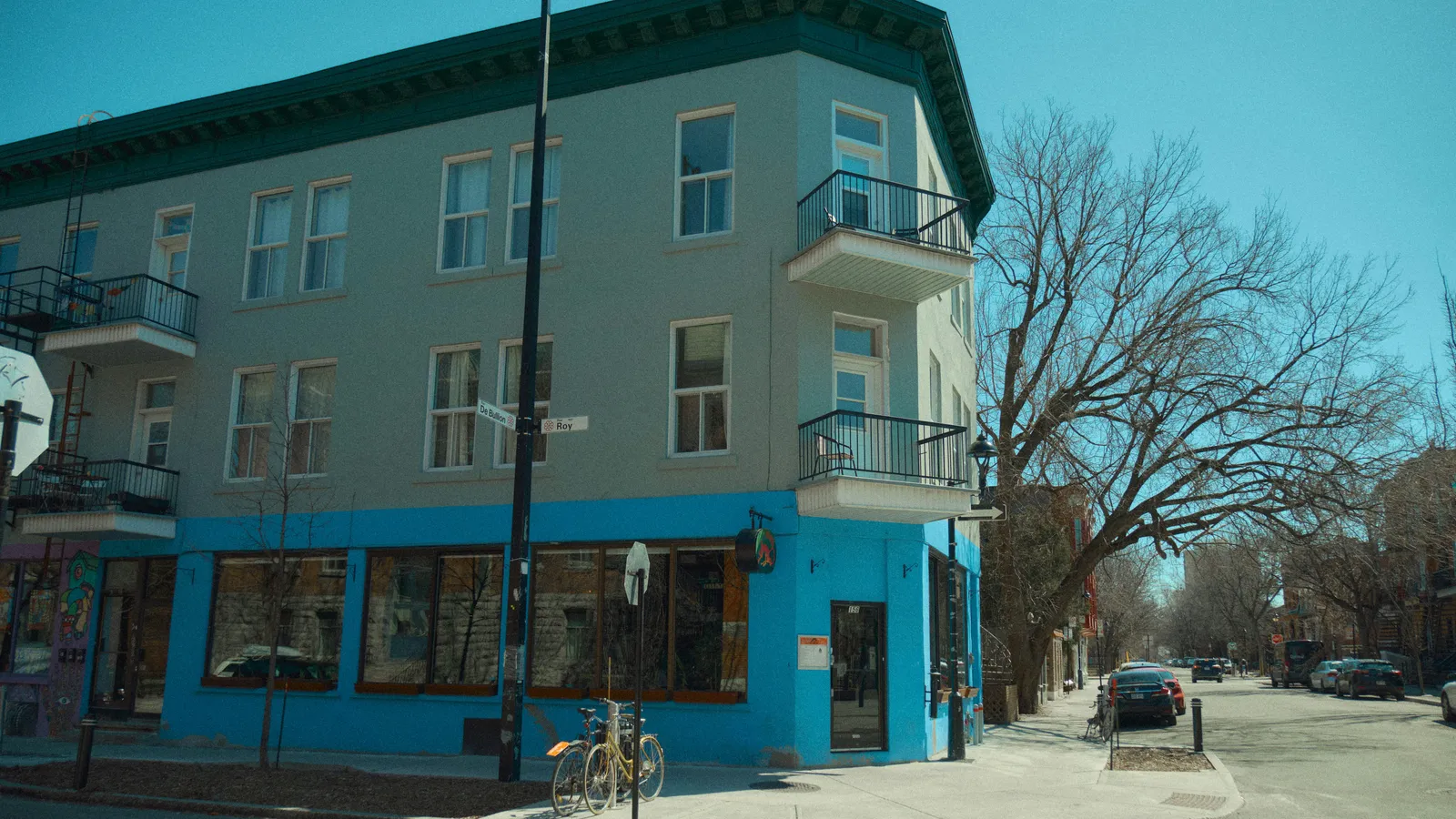
Corner building with a bright blue ground-floor storefront on a quiet tree-lined street

What is a Canadian merchant account?

A Canadian merchant account is a card processing account with a Canadian acquirer (the bank that processes card sales for a business). It lets you accept Visa, Mastercard and other cards, in store or online, and deposits the sales to your bank account. Because the account is in Canada, cards issued by Canadian banks are processed as domestic sales, at domestic rates.

That last point is why the country matters when you compare options for a merchant account in Canada. Card fees depend on where the customer's card was issued compared with where your merchant account is, not on the currency you charge in. So a business that sells in both countries usually needs an account in each.

Merchant accountPayment app (Stripe, Square, PayPal)
PricingQuoted for your business; can be interchange-plus (the network's cost plus a set markup)One published flat rate for most sales
Cards from outside CanadaNetwork cross-border fees, shown on your statementAn added percentage, e.g. +0.8% (Stripe) or +1.5% (Square), as published September 2026
ApprovalReviewed before you processInstant sign-up, reviewed later

Which payment providers offer local acquiring in Canada?

Any provider that gives you a Canadian merchant account. Local acquiring means a Canadian acquirer processes your card sales. Cards issued by Canadian banks are then domestic sales, at domestic rates, settling in Canadian dollars.

START's Canadian merchant accounts are locally acquired. START is a registered MSP/ISO of Elavon and the Canadian branch of U.S. Bank National Association, so your Canadian account sits with a Canadian acquirer. Sell to the U.S. as well? We add a U.S. account in USD, so U.S. cards are domestic there too.

Comparing Canadian merchant services? Ask each provider three questions:

If an acquirer outside Canada processes your sales, Canadian cards count as cross-border sales, with extra network fees. How cross-border card fees work

Credit card processing in Canada, for three kinds of business

We set up merchant accounts in Canada for businesses from Vancouver to Halifax, in store, online and over the phone. Every business is reviewed on what it sells and how it sells it. Tell us yours and we'll tell you where you stand.

Canada only, U.S. only, or both: which setup do you need?

Start with where your customers' cards come from. A card issued by a Canadian bank is domestic on a Canadian merchant account. A card issued by a U.S. bank is domestic on a U.S. account. When the two don't match, the card networks treat the sale as cross-border and add fees, even if you charge in the customer's currency.

Canada only

A Canadian business whose customers mostly pay with Canadian cards. One Canadian merchant account, settling in Canadian dollars.

U.S. only

A U.S. business whose customers mostly pay with U.S. cards. One U.S. merchant account, settling in U.S. dollars.

Both

Real sales in both countries. Two merchant accounts: a Canadian account in CAD and a U.S. account in USD, each with its own Authorize.Net gateway, set up and managed together by START.

Canada onlyU.S. onlyBoth
Merchant accountsOne, in CanadaOne, in the U.S.Two, one in each country
CurrencyCADUSDCAD on the Canadian account, USD on the U.S. account
Cards from the other countryCross-border fees on U.S. cardsCross-border fees on Canadian cardsSend each country's customers to its own account, so most cards stay domestic
Best whenFew U.S. customersFew Canadian customersBoth countries are a meaningful share of sales

Why two accounts and not one account that takes both currencies? Charging a U.S. customer in U.S. dollars on a Canadian account doesn't make the sale domestic. The card is still from a U.S. bank. And the Authorize.Net gateway sets each gateway account to one currency, so CAD and USD need a gateway each. How cross-border card fees work, and when two accounts pay off →

Before you apply

Canadian merchant account requirements

Underwriters, the bank staff who approve accounts, check who owns the business, what it sells and how it sells. Decide on Canada only, U.S. only or both first: "both" means an application for each account. Have your documents ready before you start.

  • →Business: your registration or incorporation documents and your Business Number from the Canada Revenue Agency.
  • →Owners and banking: government ID for each owner and a void cheque or bank letter for the deposit account.
  • →Selling online: a website with clear prices, refund and privacy policies, and your contact details.
Full guide: Canadian merchant account requirements

Credit card processing fees in Canada

Every card sale carries interchange (paid to the bank that issued the card), card network fees and your processor's markup. Small businesses get lower Visa and Mastercard rates on domestic consumer credit cards, and Visa's small-business program grows on October 24, 2026. Ask for interchange-plus pricing so those savings show up on your statement.

  • →Visa small-merchant rates until October 23, 2026: 0.77% in person and 1.30% online on standard consumer credit cards, for businesses under CAD 300,000 a year in Visa sales.
  • →From October 24, 2026: 0.70% in person and 1.20% online, and the limit rises to CAD 750,000.
  • →Compare by effective rate: total fees divided by card sales. Your monthly statement has to show it under Canada's Code of Conduct.
Full guide: credit card processing fees in Canada

Selling across the border

U.S. and Canada cross-border payments

A sale is cross-border when the card's issuing country and your merchant account's country differ. Charging in the customer's currency doesn't change that. Cross-border sales pay international interchange plus network cross-border fees, which can add a percentage point or more to each sale, and they're declined more often.

  • →Canadian Visa card on a U.S. account: Visa's International Service Assessment (1.00% when settled in USD) plus a 0.45% International Acquirer Fee, on top of international interchange (as published April 2026).
  • →Pricing in two currencies: if you offer the customer a currency choice at checkout, Visa requires it to be optional and never pre-selected.
  • →Two accounts: one per country keeps most cards domestic.
Full guide: U.S. and Canada cross-border payments

Canadian business, U.S. customers

Canadian owners often lose several percent on U.S. sales between cross-border card fees and currency conversion. You have three options, and the right one depends on how much you sell south of the border.

  • →Keep one Canadian account: simplest, but U.S. cards stay cross-border even if you charge in USD.
  • →Add a U.S. merchant account: U.S. cards become domestic. Requirements vary by bank; many U.S. providers ask for a U.S.-registered business.
  • →Run both: a Canadian account for Canadian customers and a U.S. account for U.S. customers.
Full guide: taking payments from U.S. customers

U.S. business, Canadian customers

For a U.S. business, every Canadian card on a U.S. merchant account is an international sale with extra network fees. Canadian shoppers also expect prices in Canadian dollars, and many pay with Interac debit, which runs only through a Canadian acquirer. Once Canadian sales grow, a Canadian account alongside your U.S. one is worth pricing out.

  • →Card costs: international interchange plus cross-border fees on each Canadian card.
  • →Checkout: test address checks with Canadian postal codes, and show duties and taxes up front.
Full guide: selling to Canadian customers from the U.S.

Taking payments in Canada

Authorize.Net in Canada

Authorize.Net works in Canada with a merchant account from a provider in Canada or the U.S., and it processes Canadian dollars through supported processors, Elavon among them. Each gateway account is set to one currency, so taking both CAD and USD means two gateway accounts, one per merchant account.

  • →Carts: connects to Shopify, WooCommerce and BigCommerce. Shopify Canada adds its own fee, 0.2% to 2% by plan, when you don't use Shopify Payments (September 2026).
  • →Tools: a virtual terminal, recurring billing and saved customer profiles. Which features work depends on the processor behind your account, so confirm the ones you need.
Full guide: Authorize.Net in Canada

Credit card surcharge rules in Canada

Since October 2022, Canadian businesses can add a surcharge to credit card sales, within limits. Quebec is the exception: its Consumer Protection Act requires the advertised price to be the total a consumer pays, and the Financial Consumer Agency of Canada says surcharging is an option "except in Quebec".

  • →Cap: 2.4% or your cost of accepting the card, whichever is lower.
  • →Credit only: Visa doesn't allow surcharges on debit or prepaid cards.
  • →Notice: 30 days' written notice to your processor, and disclosure at the entrance, the point of sale and on the receipt.
Full guide: credit card surcharge rules in Canada

Interac debit: Canada's debit network, used in person with chip and PIN or tap, and in Apple Pay and Google Pay. It's usually priced per transaction rather than as a percentage. Elavon is one of the acquirers Interac lists. If many of your customers pay by debit, tell us and we'll tell you how Interac fits your setup.

In store and online: take cards at the counter with a card-present terminal, online through your cart, or over the phone with a virtual terminal.

Security and privacy: PCI DSS applies in both countries. In Canada, PIPEDA requires you to report breaches that pose a real risk of significant harm and keep breach records for two years. Quebec's Law 25 adds its own duties, including naming a person in charge of personal information.

When you need to switch

Switching payment processors in Canada

Canada's Code of Conduct for the Payment Card Industry gives businesses rights most U.S. merchants don't have. When your processor raises a fee, you can often leave without a penalty. Line up your new account before you give notice, so you never go a day without taking cards.

  • →Notice: 30 to 60 days before a fee change takes effect.
  • →Cancel without penalty: within 70 days of a fee increase or a new fee, unless the increase was already set out in your agreement's fee schedule.
  • →Renewals: automatic extensions are limited to terms of six months or less.
Full guide: switching payment processors in Canada

Chargebacks: Visa and Mastercard dispute rules work the same way in Canada. See signs of card-not-present fraud and chargeback ratio limits. Closed by a payment app? Read what to do after Stripe, Square or PayPal shuts you down.

Why businesses choose START for Canadian merchant services

Canada is a specialty
We set up businesses that need Canadian processing only, U.S. processing only, or both.
Both countries, done properly
A Canadian account in CAD and a U.S. account in USD, each with its own Authorize.Net gateway, set up and managed together.
Registered in Canada
A registered MSP/ISO of Elavon and the Canadian branch of U.S. Bank National Association, working with businesses from Vancouver to Halifax.
Authorize.Net specialists
20+ years in payments and more than 60,000 Authorize.Net accounts set up.
Real people
A Salt Lake City team, Monday to Friday, 9 to 5 Mountain Time, at 888-573-7587.
Plain answers
Dated, sourced guides on cross-border fees, surcharging and your rights under the Code of Conduct.

Canadian merchant account FAQ

Which payment provider offers local acquiring in Canada?

Any provider that sets you up with a Canadian merchant account, meaning a Canadian acquirer processes your sales. START sets up Canadian accounts as a registered MSP/ISO of Elavon and the Canadian branch of U.S. Bank National Association, so Canadian cards are processed as domestic sales. Ask any provider which acquirer processes your sales and whether it's in Canada. Local acquiring in Canada →

Can one merchant account handle sales in Canada and the U.S.?

It can accept cards from both countries, but cards from the other country are processed as cross-border sales, with higher fees, whatever currency you charge in. If both countries are a real share of your sales, we set up two merchant accounts, a Canadian account in CAD and a U.S. account in USD, each with its own Authorize.Net gateway. Cross-border payments: one account or two →

Can I accept U.S. dollars on a Canadian merchant account?

Some Canadian providers let you charge in U.S. dollars, but a U.S. customer's card is still a cross-border sale on a Canadian account, because fees follow the country that issued the card. If U.S. sales are a big share of your business, a U.S. account in USD removes those cross-border fees on U.S. cards. Taking payments from U.S. customers →

Can a U.S. company get a Canadian merchant account?

Often, yes. Canadian acquirers typically want a Canadian business presence and a Canadian bank account for deposits, but requirements depend on the bank and your structure. Tell us how your business is set up and we'll tell you what applies. Selling to Canadian customers →

Can I charge a credit card fee in Canada?

Outside Quebec, yes, on credit cards only: up to 2.4% or your cost of accepting the card, whichever is lower, with 30 days' written notice to your processor and clear disclosure. You can't surcharge consumers in Quebec. You can offer a discount for cash or debit anywhere. Surcharge rules in Canada →

Does Authorize.Net work in Canada?

Yes, with a merchant account from a provider in Canada or the U.S. It processes Canadian dollars through supported processors, including Elavon. Each gateway account uses one currency, so CAD and USD need separate gateway accounts. Authorize.Net in Canada →

Can I take Interac debit?

Interac debit runs through Canadian acquirers, in person and in mobile wallets, and Elavon is one of the acquirers Interac lists. Tell us how your customers pay and we'll tell you how Interac fits your setup.

This page is general payments guidance, not legal or tax advice. Rates and rules are as of September 27, 2026 and change often.

Canada Payment Guides

Go deeper on any topic

Ready to Get Started?

Complete our quick and secure form. We'll review your inquiry and present the best solution within 24 business hours.

Most accounts approved in 1-5 business days
Secure & confidential

Legal DBA or registered business name

Your business website or online presence

By submitting this form, you agree to our Privacy Policy and consent to be contacted about our services. We never sell your information.

Call Us

888-573-7587

M-F: 9:00 AM - 5:00 PM Mountain Time

Visit Us

1940 S. Fremont Dr STE 202
Salt Lake City, UT 84104